


As a book blogger/book reviewer for books set in Italy, from mysteries to histories, from crime to cookbooks, from thrillers to travel guides, cosy up in an armchair and let me take you on a journey around all of Italy’s beautiful regions.
This week, we are in Friuli Venezia Giulia, a northeast Italian region bordering Austria, Slovenia and the Adriatic Sea. It’s home to the sharp-peaked Dolomite Mountains and vineyards producing white wines. Trieste, the capital, was once part of the 19th-century Austro-Hungarian Empire. Its famous sights include the old quarter, the waterfront Piazza dell'Unità d'Italia square and Castello di Miramare, a former royal residence. This region is also known in English as the Julian March—each with its own distinct history, traditions and identity. The main cities and towns of Friuli-Venezia Giulia in Italy include Trieste - famous for its grand seafront square; Udine- a historic art city featuring a hilltop castle, Venetian-style squares, and works by the artist Tiepolo. and Pordenone - a modern and active city in the western part of the region, known for a historic centre and major book events.


Why are books set here?
Authors are drawn to Friuli Venezia Giulia because its location in Italy's northeastern corner creates a rich intersection of geography and history. Sitting at the historic crossroads of Latin, Slavic, and Germanic cultures, the region serves as a striking backdrop for themes of borders, identity, trauma, and resilience. Trieste famously hosted literary greats like James Joyce and Italo Svevo, inspiring a legacy of introspective, border-defying fiction. The region’s shifting national borders through the 20th century provide high-stakes tension for historical and coming-of-age novels
And now to the books!
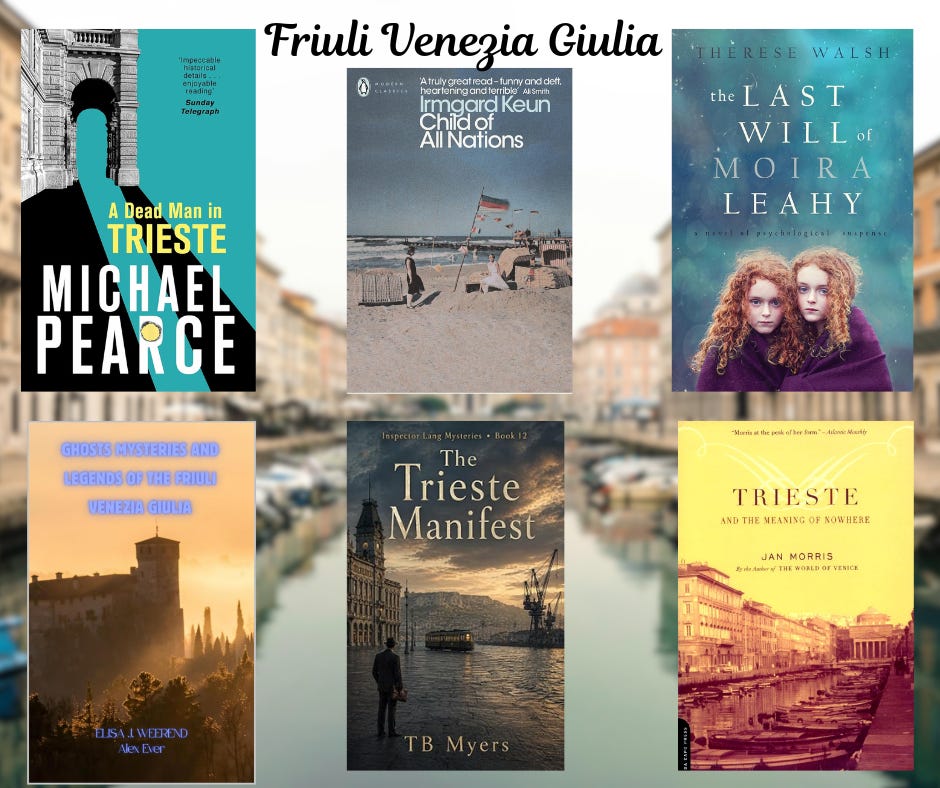
Child of All Nations
A delicious novel about an irreverent thirteen-year-old. While set both in Germany and Italy, the protagonist’s journey leads her to Trieste, where she encounters the international atmosphere of the city
by Irmgard Keun (Author), Michael Hofmann (Translator, Afterword, Other Contributor)
Kully knows some things you don’t learn at school. She knows the right way to roll a cigarette and pack a suitcase. She knows that cars are more dangerous than lions. She knows you can’t enter a country without a passport or visa. And she knows that she and her parents can’t go back to Germany again – her father’s books are banned there. But there are also things she doesn’t understand, like why there might be a war in Europe – just that there are men named Hitler, Mussolini and Chamberlain involved. Little Kully is far more interested in where their next meal will come from and the ladies who seem to buzz around her father.
Meanwhile, she and her parents roam through Europe. Her mother would just like to settle down, but as her restless father struggles to find a new publisher, the three must escape from country to country as their visas expire, money runs out and hotel bills mount up.
The Last Will of Moira Leahy: a novel of psychological suspense
‘Honest, imaginative and moving - this haunting tale follows two sisters born in a small village near Udine, exploring themes of family, mystery, and connection’
by Therese Walsh
Maeve Leahy is a busy professor of languages at a university in upstate New York. So busy that she leaves little time for memories of her lost twin, Moira; her fractured family in Castine, Maine; and the music she left behind in the wake of tragedy nine years ago.
Until a childhood relic and series of anonymous notes resurrect her long-dead dreams, a lost language, her most painful recollections, and prompt her to cross an ocean in search of ancient history. There, Maeve will learn new truths about her past and come face to face with the one thing she truly fears. Only then can she choose between the safe life she’s built for herself and one of risk, with bonds she knows can be wrenchingly delicate and more enduring than time.
The Trieste Manifest: Inspector Lang Mysteries : Book 12
by TB Myers
A British marine surveyor is found dead in a rented flat on the Trieste waterfront. The Italian classification is suicide. The widow disagrees.
September 1935. The cable that summons Inspector Lang from his quiet Clapham retirement is from a Yard colleague who knows better than to send it casually. Edmund Carlisle of Lloyd’s of London had been investigating a discrepancy in the cargo manifests of seven Mediterranean shipments — the kind of small numerical pattern that looks, on a first glance, like the standard losses of long-haul trade, and on a second glance, like something else entirely.
What Lang finds in Trieste is the architecture of supply behind a darkening Europe: strategic materials moving by undeclared routes, a respected brokerage with a senior partner whose composure is its own kind of confession, a Slovene clerk with reasons of his own, and a quiet receiving end on the Dalmatian coast that connects, through channels his old friend Hartley has been mapping for years, to industrial cities far further north.
The criminal case is Lang’s by warrant. The other case — the one Hartley’s letter asks him to consider — is one no warrant covers. The decision, as Hartley writes, is properly his.
A Dead Man in Trieste
"A dead man is everyone's business." Or so the saying goes in Trieste"
by Michael Pierce
Trieste in 1906 is of vital strategic importance and one of the world's greatest seaports. But assorted nationalist movements are threatening to pull the place apart, and the militarist regime has trouble keeping a lid on things.
Amid all the chaos, the British consul goes missing, and Special Branch Seymour is sent to find him. Born to an immigrant family in London's East End, Seymour has an acute linguistic ear - crucial in turn-of-the-century Trieste. As he attempts to solve the riddle of the consul's disappearance, Seymour discovers dark and disturbing corners of the city and finds that it holds the secrets of his own family's past.
Trieste And The Meaning Of Nowhere
This wonderful piece of art and history shows the wounds of WWI
by Jan Morris
This history-drenched city on the Adriatic has always tantalised Jan Morris with its moodiness and changeability. After visiting Trieste for more than half a century, she has come to see it as a touchstone for her interests and preoccupations: cities, seas, empires. It has even come to reflect her own life in its loves, disillusionments, and memories. Her meditation on Trieste is characteristically layered with history and glows with stories of famous visitors from James Joyce to Sigmund Freud.
A lyrical travelogue, Trieste and the Meaning of Nowhere is also superb cultural history and the culmination of a singular career -- "an elegant and bittersweet farewell" (Boston Globe).
Ghosts Mysteries and Legends of the Friuli Venezia Giulia
by Elisa J. Weerend (Author), Alex Ever (Author)
Discover an unexpected Friuli Venezia Giulia: among mist-wrapped villages, whispering castles, and silent coastlines, stories of ghosts, mysteries, and folk legends intertwine. A journey through places and tales that brush against the supernatural, perfect for those who love thrills, history, and the allure of the unknown.
In the Kitchen!
The region's unique landscape really makes its cuisine special! A unique mix of Italian, Austrian, and Slavic traditions featuring iconic specialities like frico (a crispy or soft potato and cheese pancake). You can also find delightful Venetian fish dishes like sarde in savôr, boreto a la graisana, and scampi alla busara. Then there are the hearty meat dishes and sweet treats influenced by the Habsburg imperial era, such as goulash, apple strudel, and presnitz. What really makes these meals shine is the use of local ingredients, including strok (Resia garlic), radic di mont (mountain radicchio), rati (horseradish), and the lovely Rosa di Gorizia. There are also some delicious traditional dishes linked to local customs, like cjarsòns (ravioli filled with yummy herbs and plums) and pitina (minced meat) with a hint of caren (wild fennel). Plus, don’t miss out on brovada (turnips soaked in grape marc)! The area is also famous for its wonderful cheeses, like Frant, Jamar, and scuete fumade, along with a variety of tasty pork options, including cicines, musèt, sanganel, and the delicious sweet cured ham of San Daniele and Sauris, not to mention an endless selection of cured meats.


REGIONAL COOKBOOKS:
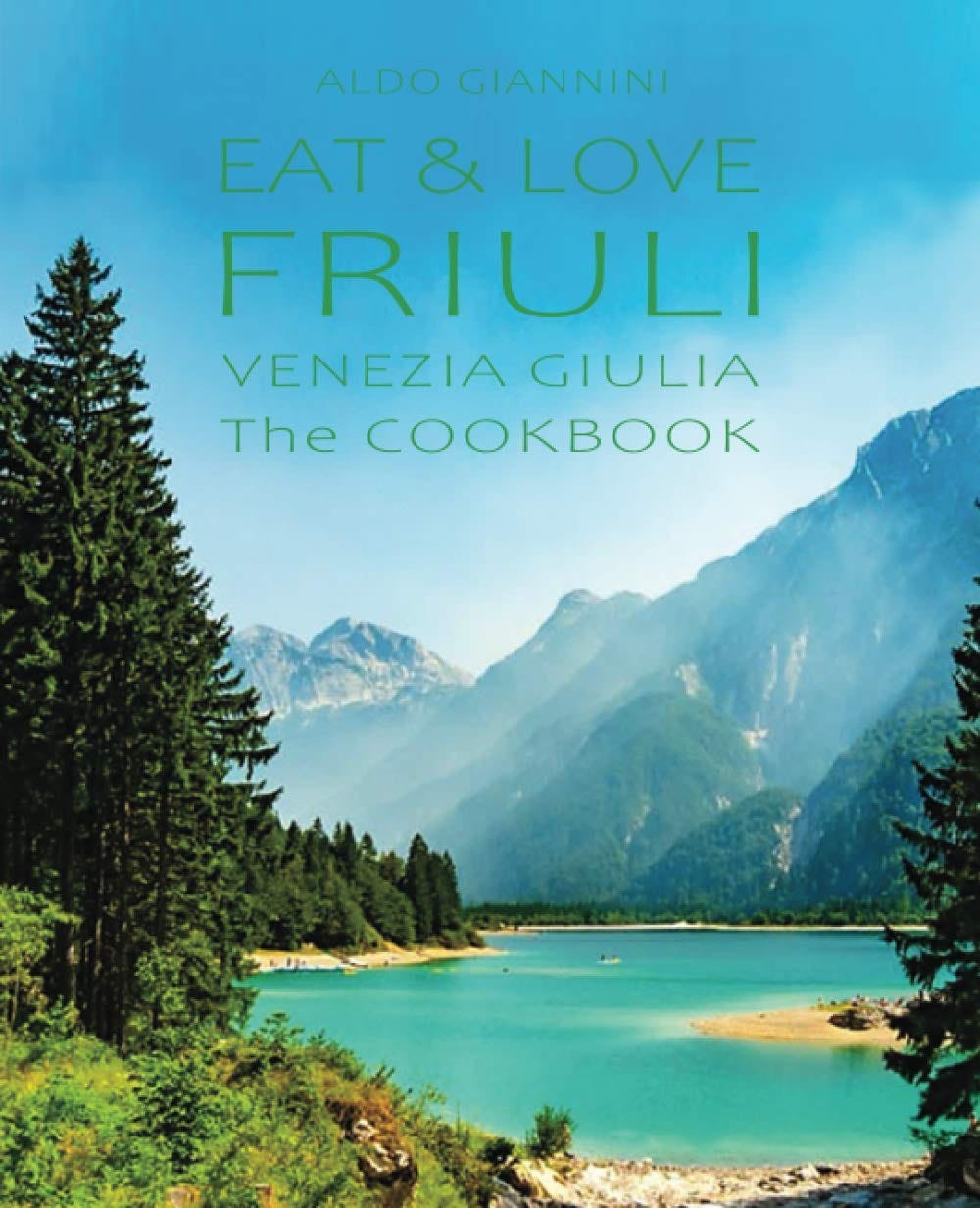
EAT & LOVE FRIULI VENEZIA GIULIA: The COOKBOOK
by Aldo Giannini
A cookbook, written in English, offering all the essential recipes of the most popular cuisine of the Italian Friuli Venezia Giulia region.
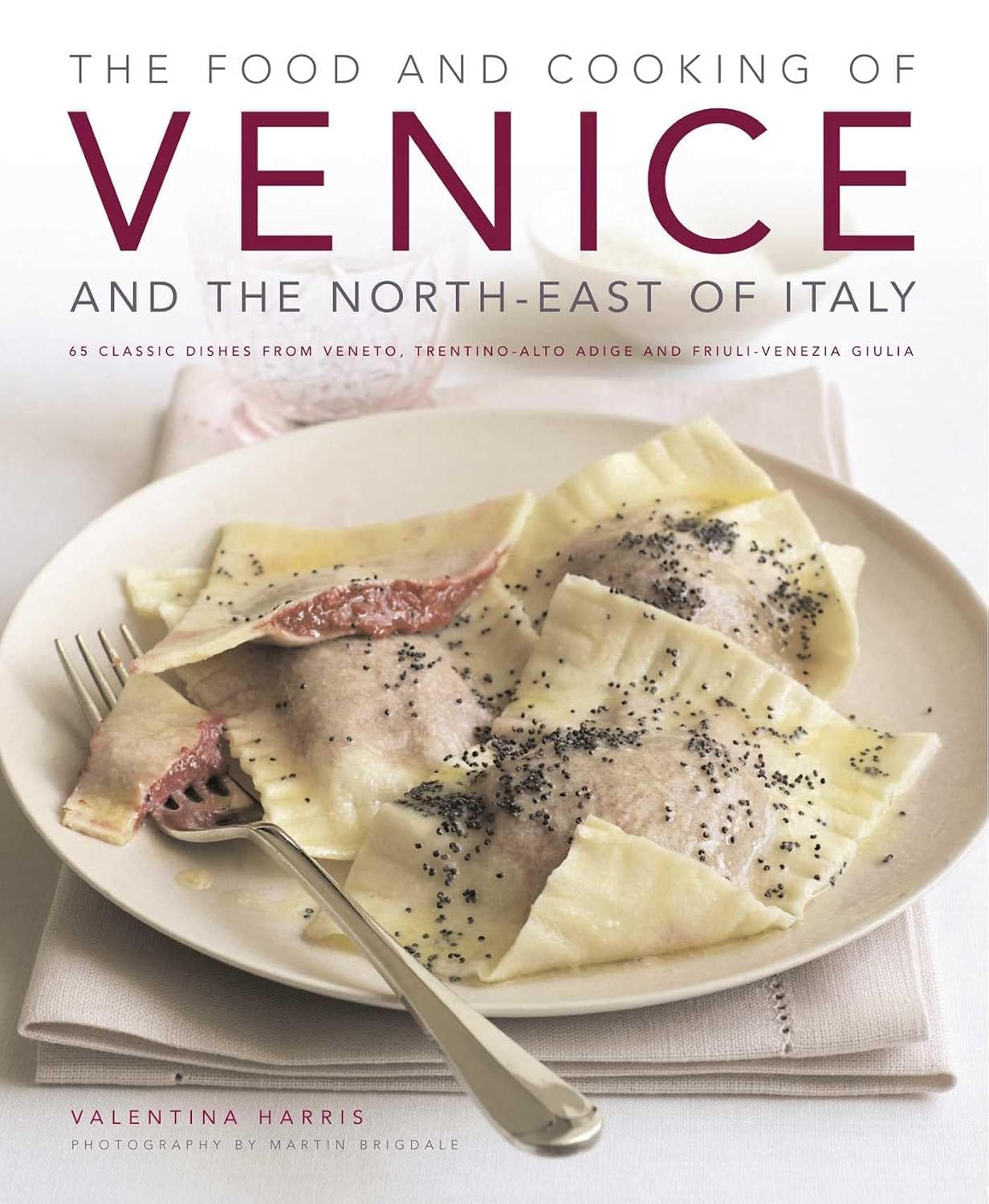
The Food and Cooking of Venice and North-Eastern Italy - 65 Classic Dishes from Veneto, Trentino-alto Adige and Fruili-Venezia Guilia
by Valentina Harris
This beautiful new book opens with an introduction to the landscape, climate, history and cuisine of each region, as well as the wonderful festivals that take place, and the foods that accompany them. This is followed by a guide to classic ingredients of these regions, including radicchio Trevisano, white asparagus, Asiago cheese, speck, Lamon beans, and famous wines, such as Bardolino and Prosecco. A collection of 65 authentic recipes follows, with chapters covering the full range of courses, including Soups and Antipasti; Pasta, Gnocchi, Rice and Polenta; Fish and Shellfish; Poultry, Meat and Game; Eggs, Vegetables and Cheese; and Desserts and Baking. With 370 inspiring photographs and cook's tips and variations, this book is perfect for anyone who wants to explore the unusual cuisine of Venice and north-eastern Italy.
*********************************
I hope you enjoy my choice of books! See you in the next region soon
Great selection of books from the region. And the food looks delicious. I am going to Sorrento next week. Do you have any suggestions for books set there. I am currently reading Ferrante's work.